
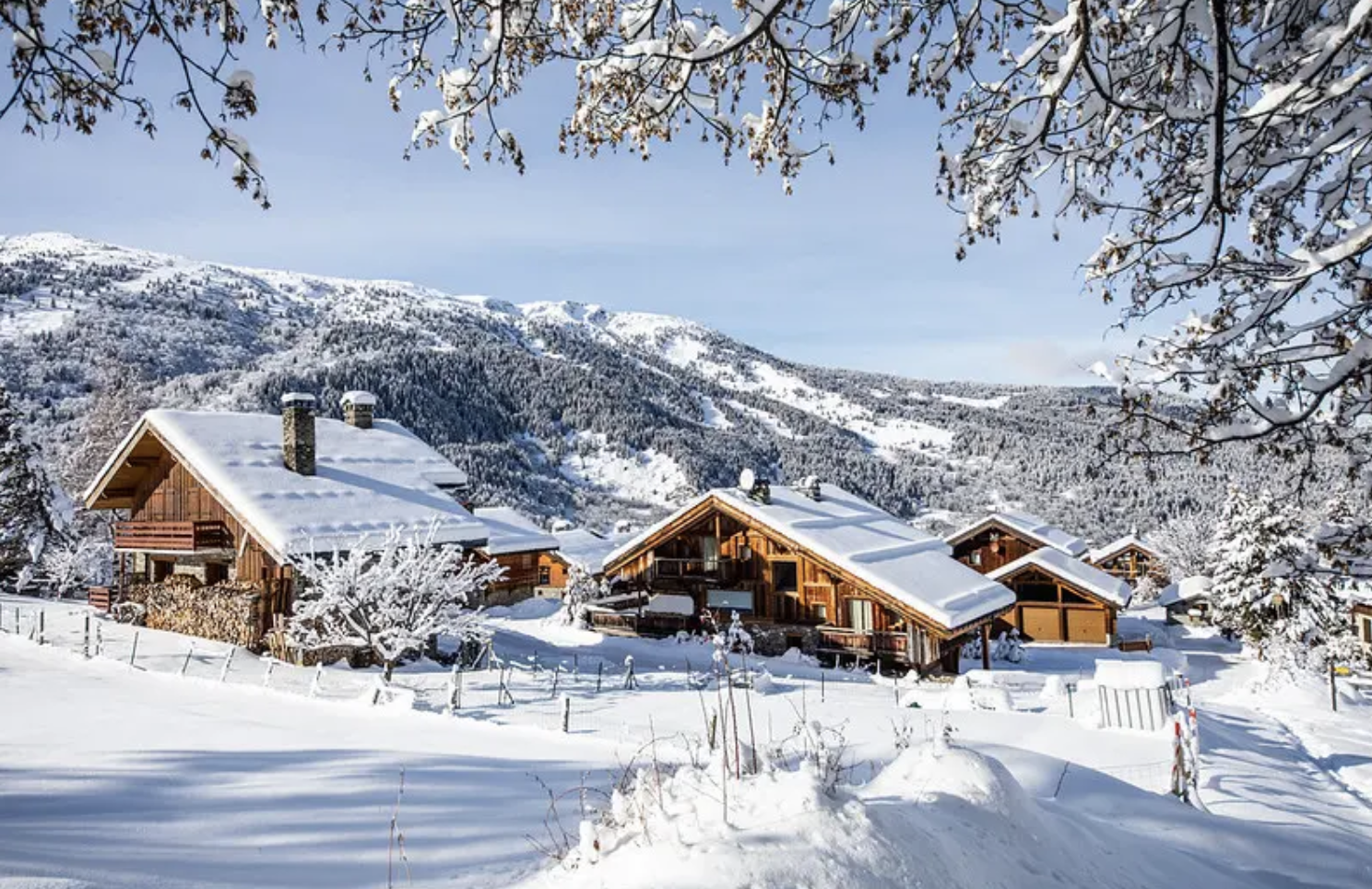
A family second home at the foot of the slopes, a timber chalet to let to skiers during the winter season, a main residence in a mountain village or an old alpine chalet to restore: ski chalet projects in France are very diverse. Many of them are carried out by buyers who live abroad or who are not familiar with French law, and they often share the same misconception, namely that a chalet is a “light” structure, easier to build and less regulated than a traditional house. Catalogues of kit and log chalets reinforce this impression.
Legally, however, this impression is misleading. A ski chalet is a construction within the meaning of the French Town Planning Code (Code de l’urbanisme), subject to the same authorisations, the same local rules and the same insurance obligations as a masonry house. On top of this come issues specific to ski areas: the rules of the Mountain Law (loi Montagne), recently amended by Law No. 2026-797 of 18 August 2026 for a living and sovereign mountain, natural hazards such as avalanches, easements linked to ski runs and ski lifts, local measures restricting second homes and holiday lets, and the legal classification of the contract signed with the chalet manufacturer.
Is a ski chalet a construction like any other in the eyes of the law?
The building method does not change the legal classification
The Town Planning Code has no specific legal category for chalets: the material (solid logs, timber frame, cross-laminated timber) and the manufacturing method are irrelevant; only the nature of the structure, its dimensions and its intended use matter. Article R. 421-1 of the Town Planning Code sets out the principle that new constructions must be preceded by the grant of a building permit (permis de construire), except where they fall within the cases of exemption from formalities or of prior declaration listed in the regulations.
A ski chalet intended for residential use, placed on foundations or on a slab, is therefore a new construction like any other, even if it was delivered in kit form and assembled in a few weeks. The fact that it can technically be dismantled is not in itself enough to take it outside the ordinary rules.
Demountable chalets: narrow regimes that rarely apply in a ski resort
Two special regimes are sometimes relied on, usually wrongly.
The first is that of light leisure dwellings (habitations légères de loisirs, HLL), defined by Article R. 111-37 of the Town Planning Code as demountable or transportable constructions intended for temporary or seasonal leisure occupation. This regime only applies in the locations exhaustively listed in Article R. 111-38 of the same Code: residential leisure parks specially laid out for that purpose, certain holiday villages classified as light accommodation, the outbuildings of approved family holiday homes and, subject to limits on numbers, certain lawfully created campsites. A chalet built on an ordinary private plot in a ski resort does not fall under this regime.
The second is that of demountable residences constituting the permanent home of their users (Article R. 111-51 of the Town Planning Code): installations without foundations, occupied as a main residence for at least eight months a year, which must at all times be easily and quickly dismantled together with their exterior equipment. These cumulative criteria do not fit a ski chalet used as a second home, nor a log chalet weighing several tens of tonnes with buried utility connections.
Once this classification is established, the next step is to determine precisely which planning authorisation is required.
Which planning authorisation is needed to build a ski chalet?
The applicable thresholds
The Town Planning Code relies on two measurements: the footprint (emprise au sol, the vertical projection of the building’s volume) and the floor area (surface de plancher). Height is also taken into account.
Outside protected areas, Article R. 421-2 of the Town Planning Code exempts from all formalities new constructions whose height is twelve metres or less and whose footprint and floor area are both five square metres or less. Article R. 421-9 makes subject to prior declaration (déclaration préalable) constructions whose footprint or floor area exceeds five square metres, provided neither exceeds twenty square metres, and whose height remains twelve metres or less. Above that, a building permit is the rule, in accordance with Article R. 421-1. In practice, any habitable ski chalet therefore requires a building permit; the lower thresholds only concern small annexes such as a ski room, a wood store or a shed.
These thresholds are stricter within the boundaries of remarkable heritage sites, in the vicinity of historic monuments and in listed sites or sites in the process of being listed, which Articles R. 421-2 and R. 421-9 expressly exclude from their scope. Many historic mountain villages are concerned. It should also be borne in mind that exemption from formalities does not exempt the owner from complying with the substantive rules of the local urban development plan (plan local d’urbanisme, PLU).
Mandatory use of an architect above 150 m², and always for a company
Using an architect is in principle mandatory to draw up the architectural project submitted with a building permit application. Article R. 431-2 of the Town Planning Code nevertheless exempts individuals who declare that they intend to build for themselves a construction for non-agricultural use whose floor area does not exceed 150 m². The same article specifies that an architect becomes mandatory again where works on an existing building cause the floor area or footprint of the whole to exceed this ceiling.
Two points are particularly relevant for ski chalets. Family chalets designed to sleep several households frequently exceed 150 m² of floor area. And many buyers, particularly foreign buyers, hold the property through a company (SCI, SAS or SARL): a company does not benefit from this exemption, which is reserved for individuals.
Specific documents for the permit application
Beyond the usual documents, Article R. 431-16 of the Town Planning Code requires, depending on the case, additional documents that very often concern mountain projects. These include the document certifying the compliance of the non-collective (on-site) sanitation project where the project involves installing such a system (d), the certificate of compliance with earthquake-resistance rules at the design stage where required (e), the certificate drawn up by the architect or an expert where a risk prevention plan makes construction subject to a prior study (f), and the certificate of compliance with energy and environmental performance requirements where required (j).
The environmental regulation known as RE2020 applies to new residential buildings for which the permit application was filed on or after 1 January 2022. A ski chalet, whether a main or a second home, is subject to it like any other house, with one certificate attached to the permit application and a second certificate attached to the declaration of completion of works. The structure must also be designed for the snow loads applicable at the site, which is a technical point to be checked with the designer and the structural engineer.
These rules combine with the provisions specific to mountain areas.
Building in a ski resort: what the Mountain Law changes
The principle of continuity of development, relaxed by the Law of 18 August 2026
In municipalities classified as mountain areas, which is the case of many ski resort municipalities, development must in principle take place in continuity with existing built-up areas. This rule, which originates from the Mountain Law of 9 January 1985 and is codified in Article L. 122-5 of the Town Planning Code, is the main reason why permits are refused for isolated chalets, for example on a plot “with a view of the slopes” away from the village.
Law No. 2026-797 of 18 August 2026 for a living and sovereign mountain, published in the Official Journal (JO) of 19 August 2026, amended this provision. In its current wording, Article L. 122-5 provides that development takes place in continuity with existing towns, villages, hamlets or groups of existing buildings. Previously, the text referred to groups of “traditional buildings or dwellings”. According to a commentary published in the journal L’Essentiel Droit de l’immobilier et urbanisme in October 2026, this amendment now allows any group of buildings to serve as an anchor point for continuity of development.
The same Law rewrote Article L. 122-5-1 of the Town Planning Code, which now provides that the continuity principle takes into account the local characteristics of traditional housing, the existing buildings, the presence of roads and utility networks, and physical breaks. These criteria are still assessed case by case and, as the Law is very recent, the way the administrative courts will apply them has not yet been established by published case law.
Article L. 122-5 also maintains limited possibilities outside continuity: the adaptation, change of use, refurbishment, limited extension or raising of existing buildings, as well as the construction of annexes of limited size to those buildings.
Practical example: Thomas owns a plot located about one hundred metres from a group of four old barns and a ski-lift maintenance building, on the other side of a mountain stream. His permit for a ski chalet was refused in 2025 on the grounds that the plot was not in continuity with a group of traditional buildings or dwellings, and that the stream constituted a break. Since the Law of 18 August 2026, the existing group of buildings can be taken into account without requiring that they be traditional buildings or dwellings, but the physical break remains a criterion expressly mentioned in Article L. 122-5-1. A new application is therefore not guaranteed to succeed.
Alpine chalets: no conversion into a ski rental
Old alpine chalets (chalets d’alpage) are subject to a specific regime provided for in paragraph 3 of Article L. 122-11 of the Town Planning Code, also amended by the Law of 18 August 2026. The restoration or reconstruction of old alpine chalets or summer grazing buildings may be authorised, including where the building is in ruins, as may limited extensions of existing alpine chalets or summer grazing buildings where their use is linked to a seasonal professional activity.
This regime comes with strict conditions. The project must aim to protect and enhance the mountain heritage. In the case of reconstruction, the main characteristics of the former building must be preserved. Authorisation is granted by the State administrative authority, after consulting the departmental commission for the preservation of natural, agricultural and forest areas and the departmental commission for nature, landscapes and sites.
Above all, a building reconstructed from a ruin may only be used for pastoral activities or hiking, to the exclusion of any commercial activity, and may not be subject to any change of use. Where the chalet is not served by roads and utility networks, or by roads usable in winter, the authorisation, which can only be express, is conditional on the creation of an administrative easement published in the land register, prohibiting use of the building in winter or restricting its use. This easement releases the municipality from the obligation to provide utility connections.
Practical example: Claire inherits the ruins of an alpine chalet at an altitude of 1,900 metres, close to a ski area, and wants to rebuild it as a ski chalet that she would let to skiers in winter. Since the Law of 18 August 2026, the reconstruction of a ruin is expressly contemplated by the text, but the rebuilt building may only be used for pastoral activities or hiking, without any commercial activity. The planned winter rental is therefore not compatible with this regime, and winter use may even be prohibited by an easement.
Avalanches and other natural hazards
The Mountain Law rules combine with those of the local urban development plan (zoning, height, roof pitch and materials, façade colours, siting) and, where applicable, with a natural hazard prevention plan (plan de prévention des risques naturels, PPRN), governed by Articles L. 562-1 et seq. of the Environmental Code. In ski areas, these plans frequently cover avalanches, rockfalls, torrential floods and landslides. Where the plot is covered by such a plan, the plan may prohibit construction, attach requirements to it (reinforced façades facing the slope, limited openings, positioning of entrances) or require a prior study, the certificate for which must be included in the permit application.
This situation also has consequences at the end of the works: Article R. 462-7 of the Town Planning Code makes an on-site compliance inspection (récolement) mandatory where works are carried out in an area covered by a natural hazard prevention plan, subject to the exceptions provided for in the text. The period available to the authorities to challenge compliance is then longer, as we will see below.
Ski runs and ski lifts: easements to check before buying
A plot located near the slopes may be encumbered, or become encumbered, by a ski-run easement (servitude de piste). Article L. 342-20 of the Tourism Code allows private properties to be burdened, for the benefit of the municipality, a group of municipalities, the department or a joint syndicate, by an easement intended in particular to ensure the passage, layout and equipment of alpine ski runs, the overflight of land by ski lifts, the installation of lift pylons whose footprint is less than ten square metres and the access needed to install, maintain and protect runs and lifts. As amended by the Law of 18 August 2026, the same article also allows, after consultation, easements for non-motorised leisure trails within a ski area outside the snow season and for access to mountain sports sites and mountain refuges.
Under Article L. 342-18 of the Tourism Code, the ski-run easement can in principle only be created within the zones and sectors delimited for that purpose in the PLU. Article L. 342-23 protects existing homes: the easement may not burden land located less than twenty metres from residential or professional buildings built or authorised before the delimitation of those zones, nor land adjoining houses and enclosed by walls at that date. These protections suffer exceptions, in particular where the building was erected after the run or equipment already existed, or where the easement is the only means of creating the run, equipment or access.
In practice, a buyer who wants a “ski-in, ski-out” chalet should check the PLU zoning, the easements annexed to it and the title deeds, to know whether the plot is crossed by a run or lift and what limits this imposes on building, fencing and the use of the land in winter.
Second home and holiday lets: the local restrictions
Sectors reserved for main residences
Many ski resort municipalities have a very high proportion of second homes. Article L. 151-14-1 of the Town Planning Code allows the PLU to delimit, in urban or to-be-urbanised zones, sectors in which all new housing constructions must be used exclusively as a main residence. This option is available where the tax on vacant dwellings applies in the area concerned or where second homes represent more than 20% of the total number of residential buildings.
The consequences for a ski chalet project are direct. In such a sector, a new chalet cannot be built as a second home, and it may not be let as a furnished tourist accommodation (meublé de tourisme), except for the temporary letting of the main residence within the limits set by the Tourism Code. Any promise of sale, sale contract, lease or contract creating rights in rem over a building subject to this obligation must expressly mention it, failing which it is void. Before buying a plot to build a holiday chalet, it is therefore essential to check whether the PLU contains such a sector.
Letting the chalet to skiers
Where the chalet may be let, short-term holiday letting is regulated by Article L. 324-1-1 of the Tourism Code, amended by Law No. 2024-1039 of 19 November 2024 (known as the “loi Le Meur”). Anyone who offers a furnished tourist accommodation for rent must first file a declaration subject to registration with a national online service, which issues a declaration number. The declaration must state whether the accommodation is the owner’s main residence. Failure to comply exposes the owner to an administrative fine of up to €10,000, and up to €20,000 for false declarations or a false number.
Where the chalet is the owner’s main residence, it may not be let as a furnished tourist accommodation for more than 120 days per calendar year, and the municipality may lower this ceiling to 90 days by a reasoned decision. Some municipalities also apply a prior authorisation regime for change of use. The tax treatment of these rentals is a separate matter that should be reviewed with a tax adviser.
Beyond the mountain context, the plot itself calls for specific checks.
The plot: risks and obligations to anticipate
Ground conditions and the geotechnical study
Articles L. 132-4 et seq. of the Construction and Housing Code (Code de la construction et de l’habitation, CCH) establish a system for preventing ground movement risk linked to the drying out and rehydration of clay soils. In medium or high exposure zones, the seller of undeveloped building land must provide a preliminary geotechnical study, and a geotechnical study or compliance with specific construction techniques is required before entering into a contract for the construction of a detached house. The map of these zones was updated by an order (arrêté) of 9 January 2026, published in the Official Journal of 31 January 2026, and can be checked on the Géorisques website. On sloping mountain plots, a geotechnical study is in any event strongly advisable, even where it is not legally required.
Fire risk on wooded slopes
Many chalets are located on the edge of forests. In areas exposed to forest fire risk as defined by the Forestry Code, Article L. 134-6 of the Forestry Code imposes, for plots located less than 200 metres from woods and forests, an obligation of brush clearance and of keeping the surroundings of buildings cleared, over a depth of 50 metres that the mayor may extend to 100 metres.
Utilities and non-collective sanitation
A chalet away from the resort centre often has no connection to the public sewer network. In that case, the permit application must include the document certifying the compliance of the non-collective sanitation system project, issued by the competent public service (SPANC). This document requires a prior soil study and an appropriate design, which can prove tricky on sloping, rocky or frozen ground. Access to the plot in winter (snow clearance of the access road) should also be checked, as it affects both the use of the chalet and, as seen above, certain mountain regimes.
Once the plot and the authorisation have been secured, the central question becomes the contract signed with the company that supplies and, where applicable, assembles the chalet.
Which contract should you sign with the chalet manufacturer or builder?
Kit sale, works contract or contract for the construction of a detached house?
This is probably the most important and least understood issue. Chalet manufacturers offer a wide range of packages: sale of the kit only, sale with assembly, “turnkey”, assistance with filing the permit application. Yet the legal classification of the contract determines the guarantees you benefit from.
Article L. 231-1 of the Construction and Housing Code requires a contract for the construction of a detached house with supply of the plan (contrat de construction de maison individuelle, CCMI) to be entered into by any person who undertakes the construction of a building for residential use, or for professional and residential use, comprising no more than two dwellings for the same project owner, according to a plan that the person proposed or had proposed. The obligation extends to anyone who carries out part of the construction works where the plan was supplied by them or on their behalf. These rules are mandatory (d’ordre public) (Article L. 230-1 of the CCH).
In practice, a manufacturer that offers you a chalet model from its catalogue and then takes charge of all or part of its construction may be required to enter into a CCMI, whatever title is given to the contract. Conversely, a company that merely sells and delivers components, without taking charge of the construction, is in principle a mere seller.
Case law shows that everything depends on the precise terms of the contract. In a judgment concerning precisely a solid timber chalet, the French Court of Cassation (Cour de cassation) overturned a decision of a court of appeal that had classified as a mere “kit” sale a contract under which the manufacturer had undertaken to build the chalet for a set price, in a document corresponding to a contract for the construction of a detached house (Cass. 3e civ., 3 May 2001, No. 99-14.370, published in the Bulletin). Conversely, in a case concerning a contract for the supply and assembly of timber panels, the Court of Cassation overturned a decision of a court of appeal that had held that the company had taken charge of the entire construction, whereas the payment schedule only covered the manufacture, delivery and assembly of the panels (Cass. 3e civ., 17 February 2015, No. 13-24.251).
What the CCMI gives you
The stakes of this classification are considerable. The CCMI has mandatory content and, above all, a completion guarantee (garantie de livraison). Article L. 231-6 of the Construction and Housing Code provides that this guarantee covers the project owner, from the start of works, against the risks of non-performance or defective performance of the works provided for in the contract, at the agreed price and within the agreed time. If the builder defaults, the guarantor covers in particular the cost of price overruns needed to complete the works (with an excess that may not exceed 5% of the agreed price) and the late-completion penalties provided for in the contract. Where the contract concerns prefabricated components, the guarantee also covers the risks linked to their manufacture, installation and assembly.
A builder that starts works without having entered into the required written contract or without having obtained the completion guarantee also faces criminal penalties under Article L. 241-8 of the same Code.
Practical example: Julien, who lives in London, signs an “order form” with a manufacturer for a 110 m² ski chalet chosen from a catalogue, including supply of the kit, assembly of the frame, the roof structure and the roofing. The manufacturer also prepared the plans attached to the permit application. Before the first snowfall, the company goes into compulsory liquidation, leaving the chalet weathertight but unfinished, and the planned winter rental season is lost. If the contract was in fact a CCMI, Julien should have benefited from a completion guarantee covering in particular the cost of completion and the contractual late-completion penalties. Since no guarantee was taken out, he will have to bring a claim against the builder and, where appropriate, other parties involved, in far more difficult circumstances.
Partial self-build and works managed from abroad
Some chalet buyers carry out part of the works themselves or entrust different lots to different local companies (groundworks, slab, assembly, finishing). This division of tasks must be clearly set out in the contracts, as it determines who is liable for what. For owners who live far away, the role of any project manager (maître d’œuvre) or architect supervising the site should also be defined in writing. These choices have consequences for insurance and, in the event of resale, for the seller’s liability.
Insurance and guarantees to put in place
Construction damage insurance (dommages-ouvrage)
Article L. 242-1 of the Insurance Code requires any person who, as owner of the structure, has construction works carried out, to take out, before the works start, construction damage insurance (assurance dommages-ouvrage). Ski chalets are no exception. As we explained in detail in an article on building without construction damage insurance, an individual who builds a home to live in themselves or for close family members to live in escapes the criminal penalties provided for in Article L. 243-3, but not the obligation itself or its civil consequences. An investor or SCI that has a chalet built for rental purposes does not benefit from this exception.
A full self-builder, who does not use any company at all, is generally considered not to be covered by the obligation, since the text refers to the person who “has works carried out”. As soon as a company is involved, for example to assemble the frame or install the roofing, the analysis changes and must be carried out case by case.
The builders’ statutory guarantees
Companies working on the chalet are bound by the statutory guarantees of the Civil Code: the one-year completion guarantee (garantie de parfait achèvement) running from acceptance of the works (Article 1792-6), the two-year proper functioning guarantee (garantie de bon fonctionnement) for detachable equipment (Article 1792-3) and the ten-year liability (responsabilité décennale) for damage that compromises the soundness of the structure or renders it unfit for its intended use (Article 1792). Article 1792-4 also provides, under specific conditions, for the joint and several liability of the manufacturer of a structure, part of a structure or item of equipment designed and produced to meet precise requirements determined in advance. Whether this provision applies to a kit supplier depends on the circumstances and cannot be presumed.
For a timber ski chalet, defects affecting waterproofing, the behaviour of the wood, the roof under snow load or the connections with the foundations only fall under the ten-year guarantee depending on their severity, assessed case by case, most often after an expert assessment.
These guarantees only offer effective protection if each party involved is actually insured for the activity carried out. It is therefore essential to request and check, before signing, the ten-year liability insurance certificate of each company, making sure that the declared activities (roof structure, timber frame, roofing) correspond to the works entrusted to it. This check is all the more important where the manufacturer is established outside France.
After the authorisation: time limits, works and completion
Wait until the permit can no longer be challenged
The building permit for a chalet may be challenged by third parties within two months from the first day it is lawfully displayed on the plot. Since Law No. 2025-1129 of 26 November 2025 on the simplification of planning and housing law, a non-contentious appeal (recours gracieux) no longer extends this time limit, as we explained in our article on building permits that are free from all challenges (permis purgé de tout recours). In the mountains, the building season is short and the temptation to start immediately is strong, at the risk of the works being halted, or even the chalet having to be dismantled, if a challenge is followed by a suspension or an annulment.
Comply with the permit and declare completion
The chalet must be built in accordance with the permit granted. A change to its external appearance (colour of the cladding, roofing material, addition of a balcony or a covered terrace) may require an amended permit (permis modificatif). At the end of the works, the permit holder files the declaration certifying completion and compliance of the works (DAACT), accompanied where applicable by the required certificates, in particular the RE2020 certificate.
Article R. 462-6 of the Town Planning Code gives the authorities three months from receipt of the DAACT to challenge the compliance of the works, a period extended to five months where an on-site inspection is mandatory under Article R. 462-7, for example in an area covered by a natural hazard prevention plan, a listed site or the core area of a national park. After this period, compliance can no longer be challenged by the authorities, except in the case of fraud.
What are the risks in the event of non-compliance?
The consequences of a chalet built without authorisation, or in breach of it, are the same as for any construction. Under criminal law, works carried out without authorisation or not in compliance with it expose the offender to a fine ranging from 1,200 euros to 300,000 euros depending on the case, with prosecution becoming time-barred six years after completion of the works. Under administrative law, a building erected without a permit has no legal existence, which complicates any regularisation, any subsequent extension and resale. Under civil law, neighbours remain able to take action if they suffer harm, for example on the basis of abnormal neighbourhood nuisance (troubles anormaux du voisinage).
From a contractual standpoint, the risks are just as real: no completion guarantee if the contract was wrongly classified, no construction damage insurance, companies not insured for the activity carried out. If the chalet is resold within ten years of acceptance of the works, the seller who built it or had it built is deemed to be a builder under Article 1792-1 of the Civil Code and is liable to the buyer for defects falling under the ten-year liability.
Frequently asked questions
Can a foreign buyer build a ski chalet in France?
Yes. The planning, construction and insurance rules described in this article apply in the same way whatever the nationality or residence of the owner. A buyer who acts through a company should, however, bear in mind that the exemption from the use of an architect is reserved for individuals and that the exception to the criminal penalties for failing to take out construction damage insurance does not apply to a company building for rental purposes.
Can I build a ski chalet as a second home anywhere in the resort?
Not necessarily. In addition to the zoning rules, the PLU of the municipality may delimit sectors in which all new dwellings must be main residences, where second homes represent more than 20% of the housing stock or where the tax on vacant dwellings applies. In those sectors, a new chalet cannot be used as a second home or let as a furnished tourist accommodation.
Can I let my ski chalet to holidaymakers?
In principle yes, subject to local rules. You must first register the accommodation through the national online service. If the chalet is your main residence, letting is limited to 120 days per year, a ceiling that the municipality may lower to 90 days. Restrictions also apply in sectors reserved for main residences and, where relevant, for a reconstructed alpine chalet.
My plot is in the mountains but isolated: does the 2026 Law make it buildable?
Not automatically. The Law of 18 August 2026 broadened the notion of a group of buildings that can serve as an anchor point and clarified the continuity criteria, but it did not abolish the continuity principle. Whether a plot is buildable still depends on its actual situation, physical breaks, roads and utility networks, natural hazards and the rules of the PLU. If you were refused a permit before the reform, it may be worth having the grounds for that refusal reviewed in light of the new provisions.
Practical tips to secure your ski chalet project
The first precaution is to check that the plot is buildable before buying it. The PLU (including any sector reserved for main residences), the application of the Mountain Law, the existence of a natural hazard prevention plan (avalanches in particular), ski-run and ski-lift easements, access to utility networks, winter access and the feasibility of on-site sanitation should all be examined upstream. An operational planning certificate (certificat d’urbanisme opérationnel) provides an initial indication from the authorities on the feasibility of the project. Where the plot is purchased under a preliminary sale agreement (promesse), it is advisable to include a condition precedent that the building permit be obtained.
The second precaution is to check that the intended use is permitted: second home, holiday rental or main residence. The answer may depend on the PLU, on the Tourism Code and, for an old alpine chalet, on the restrictions attached to its reconstruction.
The third precaution is to calculate precisely the footprint and floor area of the chalet, including roof overhangs supported by posts, covered terraces and annexes such as a ski room. This calculation determines the authorisation required and, above 150 m² of floor area or where a company is the owner, the mandatory use of an architect.
The fourth precaution concerns the analysis of the contract offered by the manufacturer before signing anything: who supplies the plans, who is responsible for the foundations, assembly and roofing, and is a completion guarantee provided? The answers determine whether the contract should have taken the form of a CCMI.
The fifth precaution concerns insurance: take out construction damage insurance before the works start, and check each contractor’s ten-year liability certificate against the works actually entrusted to them.
The sixth precaution is not to start assembly until the permit can no longer be challenged, to comply strictly with the permit during the works, and to file the DAACT.
Conclusion: a ski chalet is a construction project in its own right
Building a ski chalet in France means carrying out a construction within the meaning of planning law and construction law, whatever its method of manufacture. It follows the ordinary rules: a building permit, an architect above 150 m² of floor area or where a company is the owner, specific documents in the application and RE2020 compliance.
In ski areas, the Law of 18 August 2026 relaxed the principle of continuity of development and broadened the possibility of rebuilding ruined alpine chalets, but within a framework that remains strictly regulated, particularly as regards the use of rebuilt buildings. Avalanche risk, ski-run easements and local restrictions on second homes and holiday lets must also be checked before buying the plot. On the contractual side, the line between a kit sale and a contract for the construction of a detached house is decisive, as it determines whether a completion guarantee exists. Finally, construction damage insurance and checking ten-year liability insurance remain essential, as for any structure.
If you are preparing to buy a plot to build a ski chalet, if you have been refused a permit in a mountain area, if you are unsure about the nature of the contract offered by a manufacturer or if difficulties arise during the works, it is strongly recommended that you consult a lawyer specialising in real estate and construction law, who can check the feasibility of your project, review the contracts before signature and assist you in the event of a dispute.